
Yes, in principle, but only for certain increases. If Proximus or Scarlet changes your price mid-contract without it being provided for in your terms, you can cancel without penalty. If the rise is an indexation you accepted when signing, or the end of a promo planned from the start, that right generally does not exist. The deadline is short, and that is the trap. Figures collected on 2 October 2026.
Which Proximus and Scarlet plans went up in 2026?
Mostly the older ones. On 1 January 2026, Proximus raised the plans it no longer sells, while its Flex+ range stayed unchanged. The figures below come from Belgian press published in November 2025 (L'Avenir and RTBF) and should be confirmed on your own invoice.
The Scarlet Trio bundle goes from €42 to €45 per month. Internet Essential climbs from €29.99 to €32.99. The landline takes €1.75, a second decoder €1, the Wi-Fi Booster €0.50, and older Flex plans €2 to €4 depending on configuration.
How much does each increase really cost?
Less than you might think over a month, far more over two years. The table converts each rise into cumulative cost, with simple arithmetic: monthly amount × 12, then × 24.
| Monthly increase | After 12 months | After 24 months |
|---|---|---|
| +€0.50 (Wi-Fi Booster) | €6 | €12 |
| +€1 (second decoder) | €12 | €24 |
| +€1.75 (landline) | €21 | €42 |
| +€3 (Scarlet Trio, Internet Essential) | €36 | €72 |
| +€2 to +€4 (older Flex) | €24 to €48 | €48 to €96 |
A household combining a bundle increase and a second decoder therefore pays €4 more per month, or €96 over two years. Not dramatic. Just enough to compare before resigning yourself.
Does a price rise give you the right to cancel for free?
Yes, when it comes from the operator alone. Belgian electronic communications law (article 108 §2) requires the operator to notify each subscriber at the latest one month before the change and to remind them, in the same notice, that they may cancel without penalty. The regulator, BIPT, explains the framework on its consumer pages.
The decisive nuance: the operator is exempt from this notification when there is reasonably no doubt that the subscriber accepts the change. Hence the distinction between a rise imposed on you and one that was foreseen.
Which cases open the right, and which do not?
The right depends on the nature of the increase, not its size. A €0.50 rise can open the door, a €3 rise can leave it shut.
| Your situation | Free cancellation? | What to do |
|---|---|---|
| Rise decided by the operator, not in the contract | In principle yes | Cancel in writing within the deadline |
| Indexation in your accepted terms | In principle no | Compare, negotiate |
| End of a promo planned from the start | No | Calculate the two-year cost |
| Rise on an add-on (booster, decoder) | To check | Remove the add-on if possible |
| No notification received | Strong position for you | Keep proof, dispute |
Look in your letter for the mention of the right to cancel. Its absence is not trivial.
What is the deadline?
Fast. Sources disagree on the exact calculation: the regulator's reference document uses the last day of the month following the first higher invoice, while some guides speak of three months from the notification. Faced with two readings, take the shorter one.
For example, a first higher invoice received on 12 January leaves you until 28 February under the strict reading. Send a registered letter or a message with acknowledgement of receipt, citing the increase and the date of the notification.
What steps should you follow to cancel?
Five moves are enough, in this order:
- re-read the notification and note its date, the nature of the rise and whether it mentions the right to cancel;
- check your terms for an indexation clause;
- compare the two-year cost with a competing offer, smoothing out any promo;
- ask your future operator to start the switch through Easy Switch, without cancelling yourself beforehand;
- keep all proof: letter, invoices, acknowledgements of receipt.
Our guide to switching provider without downtime covers the switchover, and the one on cancelling a subscription the mid-contract cases.
Wholesale networks by region, if you leave Proximus or Scarlet
It depends on the network deployed at your address, and it varies a lot by region. The operator you can actually sign up with depends on the wholesale network: two neighbours on the same street can have different catalogues.
| Region | FTTH (fibre to the home) coverage, mid-2026, order of magnitude | Possible wholesale networks |
|---|---|---|
| Brussels | about 78% | Proximus, other networks depending on the address |
| Flanders | about 71% | Proximus, Fiberklaar, Wyre |
| Wallonia | about 44% | Proximus, cable or VDSL where there is no fibre |
These numbers move fast. Test your address first, for instance on Fiberklaar for Flanders, then compare in our ranking of the best fibre internet plans. For resellers on the Proximus network, see also bundle or internet only.
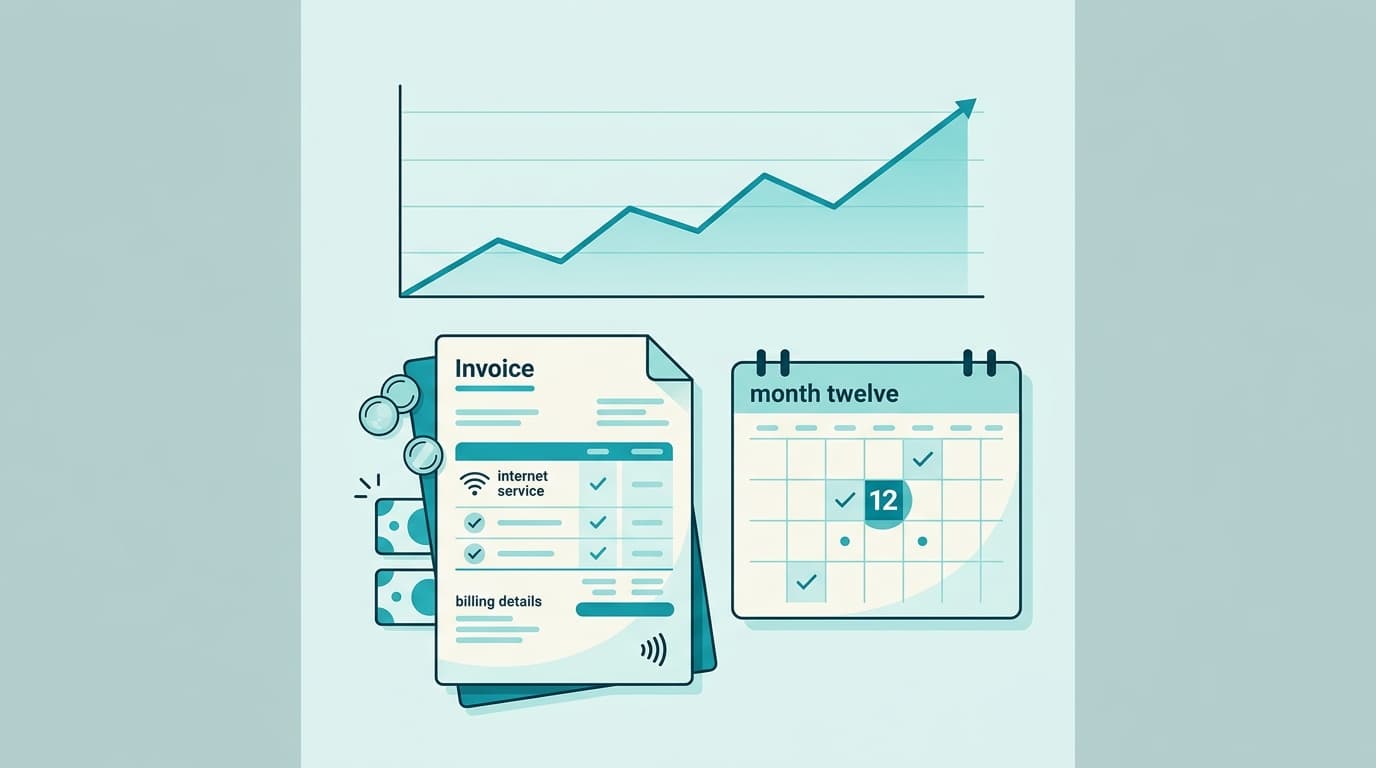
Disputes remain possible: if the operator refuses to recognise your cancellation, the Telecommunications Ombudsman Service takes up the case free of charge.
Prix & promos comparator
Compare all prix & promos side by side.
Compare now →
Frequently asked questions
Nicolas suit le marché belge des télécoms et le déploiement de la fibre depuis plus de huit ans. Ancien technicien réseau devenu analyste indépendant, il teste lui-même les connexions qu'il compare : il mesure les débits réels à différentes heures de la journée, lit les conditions ligne par ligne et traque les hausses de prix qui tombent après douze mois. Son objectif : aider les ménages belges à choisir une offre fibre qui tient ses promesses, au bon débit et au juste prix, sans jargon ni argument commercial.